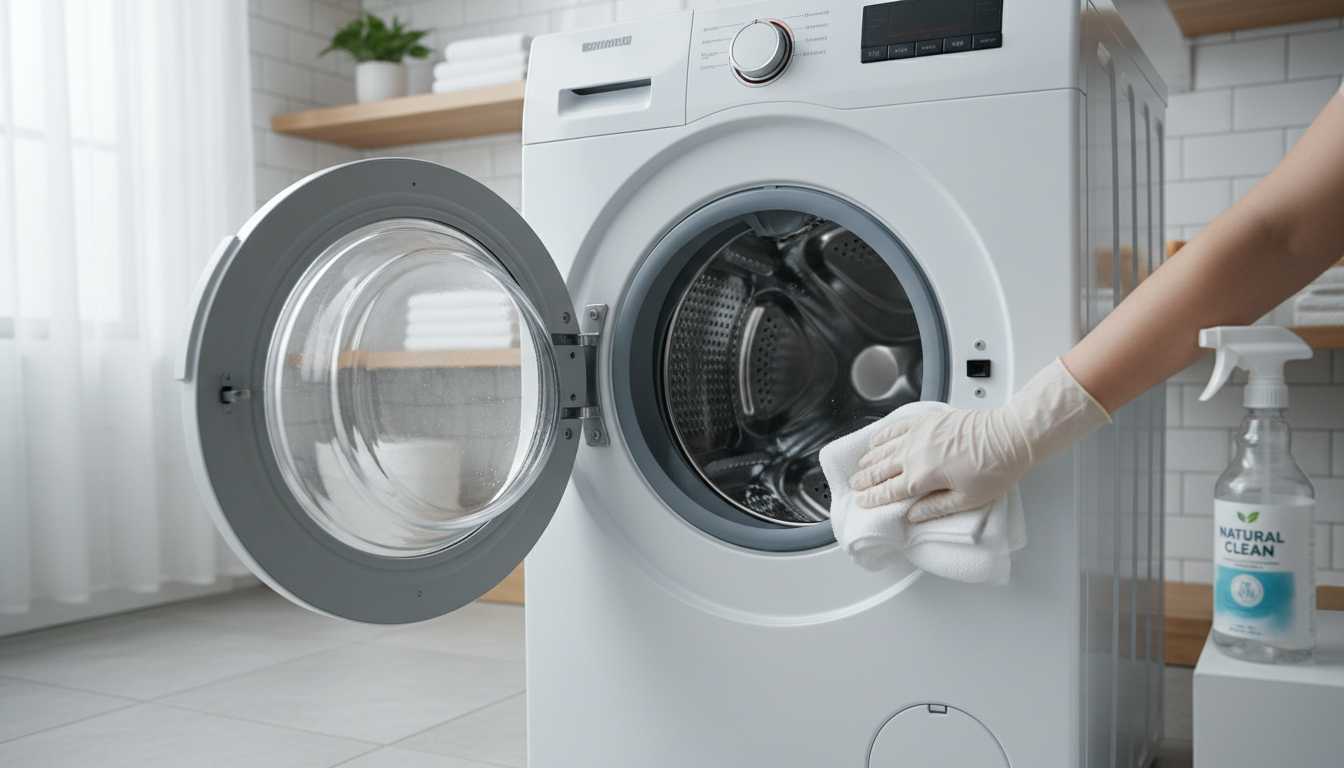
If your laundry comes out smelling less than fresh — or you’ve noticed an unpleasant odor when you open the door — your washing machine is probably overdue for a deep clean. Learning how to clean a washing machine is one of the most important home maintenance tasks you can do, and it takes less than an hour. In this complete guide, we’ll walk you through every step for both front-loading and top-loading machines, including natural methods using vinegar and baking soda, so you can banish odors, remove mold, and keep your washer running like new.
Why Regular Washing Machine Cleaning Matters
It might seem counterintuitive — after all, doesn’t a washing machine clean itself every time you do laundry? Unfortunately, the answer is no. Every wash cycle leaves behind traces of detergent, fabric softener, dirt, and body oils. Over time, this residue builds up in the drum, door gasket, detergent drawer, and filter, creating a breeding ground for bacteria, mold, and mildew.
According to bioengineer Chris Callewaert, who specializes in microbiology, modern washing machines that run at lower temperatures are especially prone to bacterial growth. “Those lower temperatures are perfect environments for bacteria to grow,” he explains. The result: your clothes come out smelling musty instead of clean, and your machine may develop streaks or residue that transfers to fabrics.
Beyond odors, a neglected washing machine can suffer mechanical problems. A clogged pump filter, for instance, can prevent proper drainage and lead to costly repairs. Regular cleaning protects both your machine and your clothes.
How Often Should You Clean Your Washing Machine?
The general recommendation is to run a full cleaning cycle once a month, or after every 30 wash loads. However, how frequently you use your machine and what you wash can change that schedule:
- Monthly: Run a drum cleaning cycle and wipe down interior surfaces.
- Every 2–3 months: Clean the detergent drawer and door gasket thoroughly.
- Every 6 months (front-loaders): Clean the pump filter.
- Immediately: If you notice a musty smell, visible mold, soap scum buildup, or your clothes smell bad after washing.
What You Need to Clean a Washing Machine
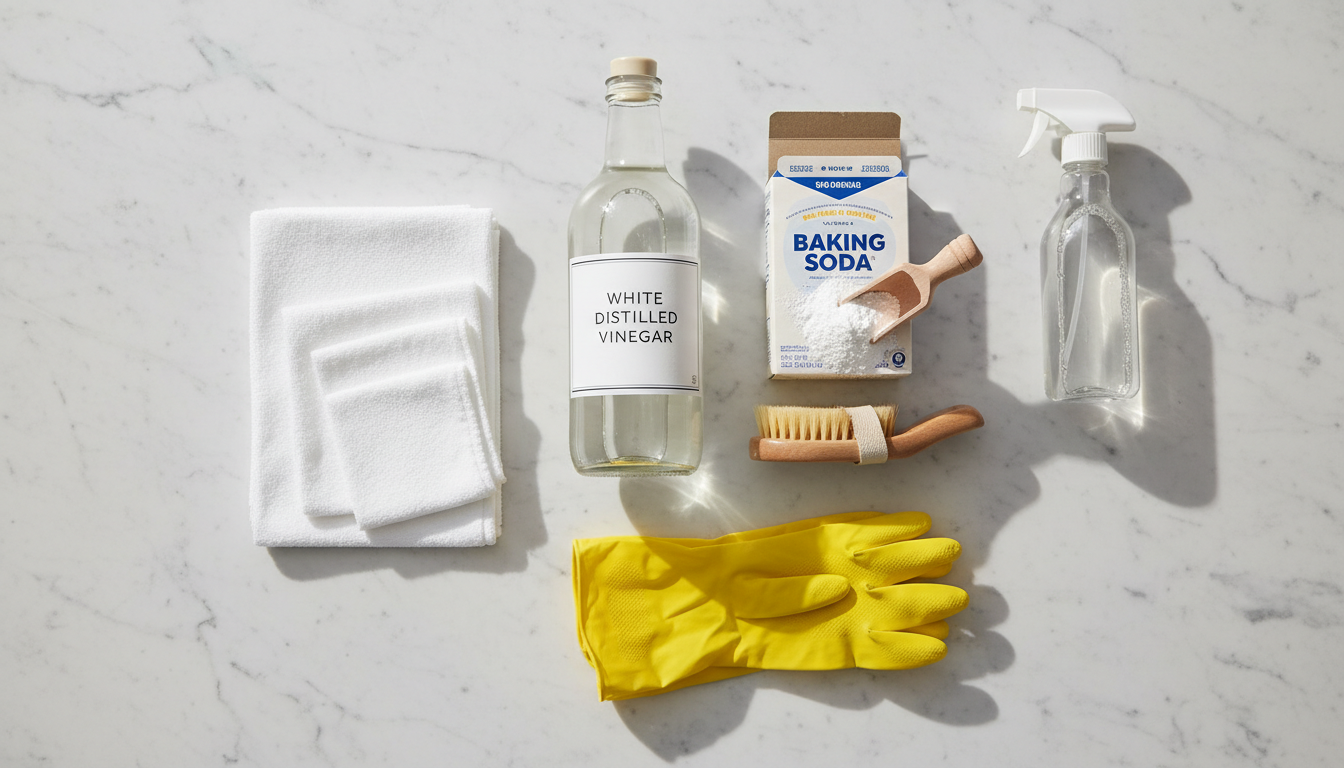
Before you start, gather these supplies:
- 2 microfiber cloths (one for cleaning, one for drying)
- Rubber gloves
- Small scrub brush or old toothbrush
- White distilled vinegar
- Baking soda
- Washing machine cleaner tablets (such as Affresh) — optional
- Liquid chlorine bleach — optional
- Shallow basin or towel (for front-loaders, to catch filter water)
- Warm water
How to Clean a Front-Loading Washing Machine
Front-loading washers are more energy-efficient than top-loaders, but they’re also more prone to mold buildup — especially around the rubber door gasket. Here is a complete step-by-step process for deep cleaning your front-load washer.
Step 1: Clean the Rubber Door Gasket
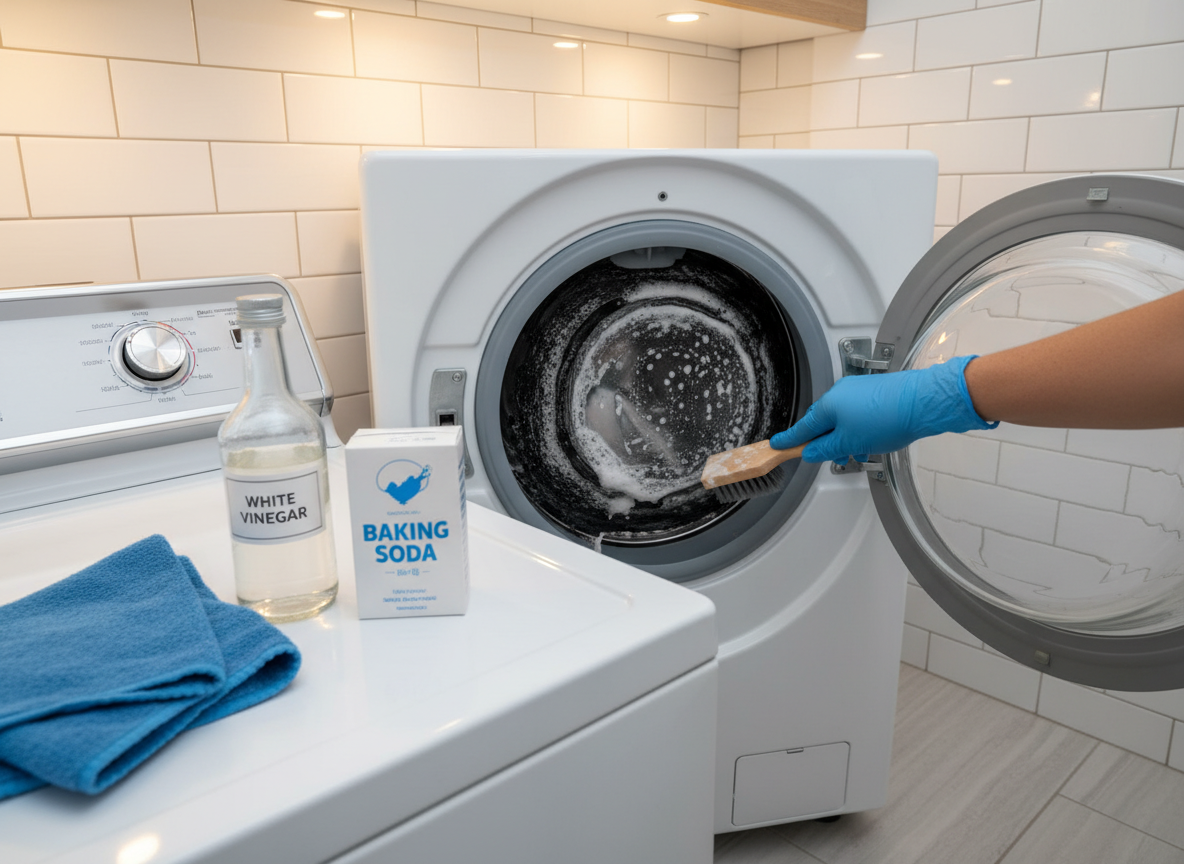
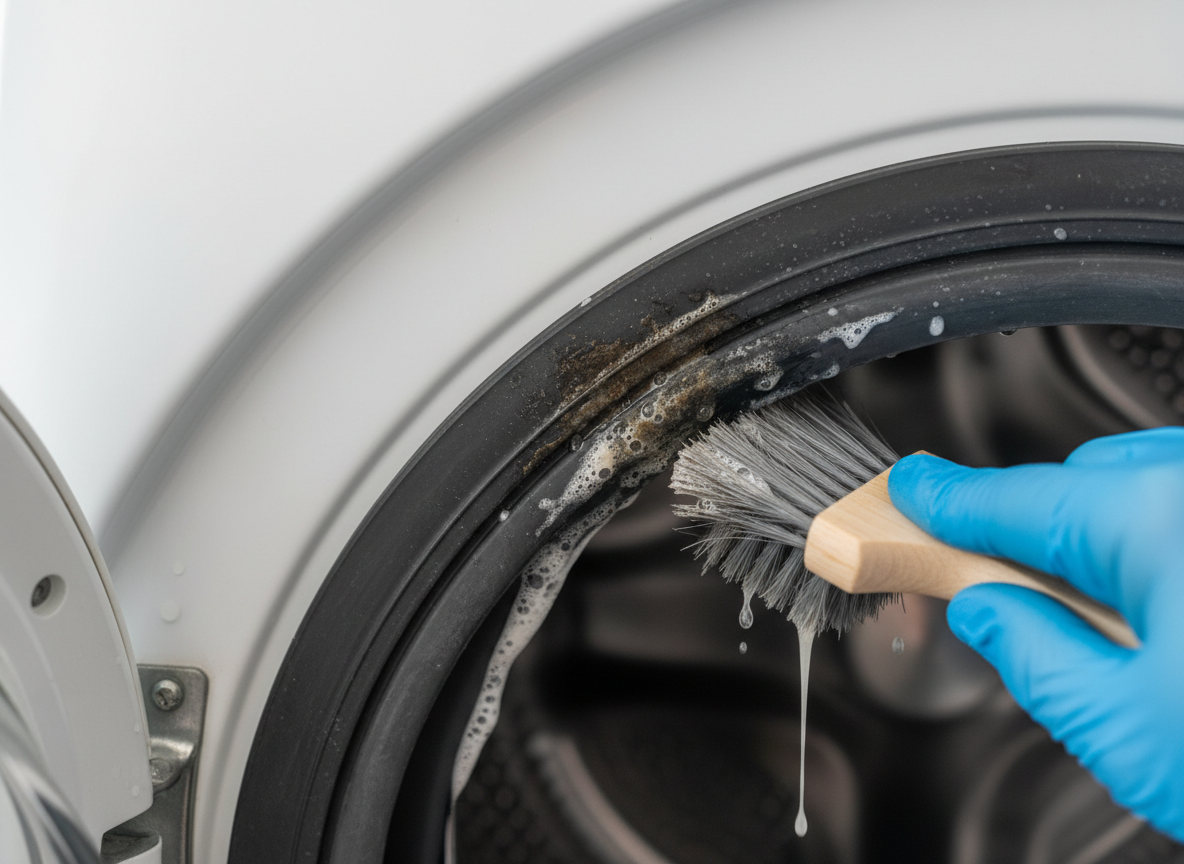
The rubber gasket (also called the door seal) is the #1 problem area in front-loading machines. Moisture, lint, and detergent residue collect in its folds, making it an ideal spot for mold and mildew to grow.
- Pull back the rubber gasket folds to expose any hidden residue or mold.
- Remove any debris, hair, or small items caught in the seal.
- Dip a small scrub brush or old toothbrush in undiluted white vinegar.
- Scrub the gasket thoroughly, paying close attention to the folds and crevices.
- Wipe away the loosened residue with a damp microfiber cloth.
- For heavy mold, apply a diluted bleach solution (1 tablespoon bleach per quart of water) and let it sit for 5 minutes before wiping clean.
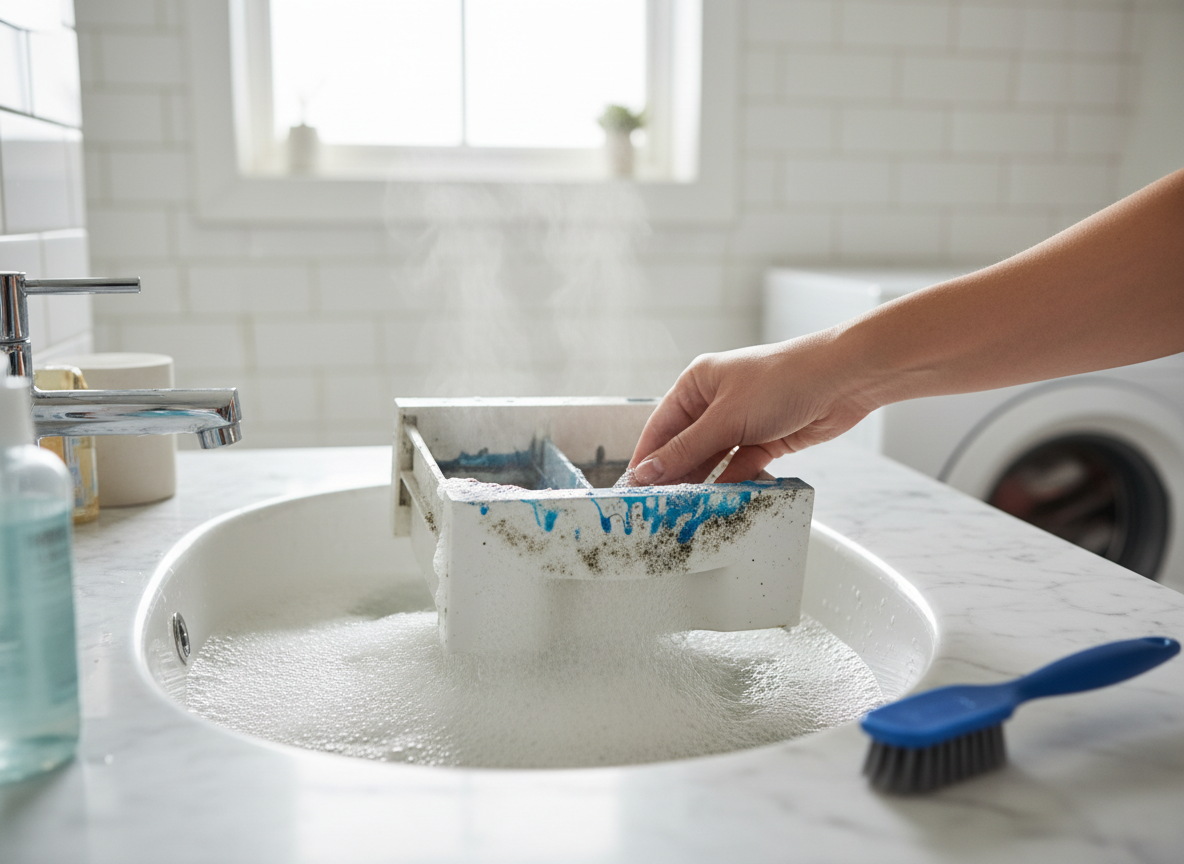
Step 2: Remove and Clean the Detergent Drawer
The detergent dispenser drawer accumulates product buildup over time, especially from liquid detergent, fabric softener, and pods. This can restrict the flow of detergent into the drum and harbor bacteria.
- Pull the detergent drawer all the way out (most drawers have a release tab — check your manual).
- Separate any removable compartments (e.g., fabric softener insert).
- Rinse the drawer under warm running water to remove loose residue.
- Soak it in a bowl of warm water mixed with a splash of white vinegar for 10–15 minutes.
- Use a small brush to scrub all compartments, paying attention to corners and slots.
- Rinse thoroughly and dry with a microfiber cloth before reinserting.
- While the drawer is out, wipe the drawer housing (the slot in the machine) with a damp cloth to remove mold or residue.
Step 3: Clean the Pump Filter
Front-load washers have a pump filter (also called a drain filter or coin trap) located at the bottom front of the machine, behind a small panel. This filter catches lint, coins, and debris before they enter the drain pump. It should be cleaned every 3–6 months.
- Unplug your washing machine from the power outlet for safety.
- Place a shallow basin and towels on the floor beneath the filter panel to catch water.
- Open the access panel at the bottom of the machine.
- Slowly unscrew the filter — water will begin to drain out, so have your basin ready.
- Once the water has drained, fully remove the filter.
- Remove any hair, lint, or debris from the filter by hand.
- Scrub the filter with a brush dipped in white vinegar to remove buildup.
- Soak the filter in hot water for 15 minutes, then rinse clean.
- Check the filter housing inside the machine and wipe clean.
- Screw the filter back in firmly to prevent leaks, then replace the panel and plug the machine back in.
Step 4: Run the Drum Cleaning Cycle
With the physical cleaning done, it’s time to clean the drum from the inside using a cleaning cycle.
- Make sure the drum is completely empty.
- Add one washing machine cleaner tablet (such as Affresh) directly into the drum, or pour 2 cups of white vinegar into the detergent dispenser.
- Select your machine’s “Clean Washer,” “Drum Clean,” or “Sanitize” cycle. If your machine doesn’t have one, choose the hottest and longest wash cycle available.
- Start the cycle and let it run completely.
- Once done, wipe the drum interior with a microfiber cloth to remove any remaining residue.
- Leave the door open for 1–2 hours to allow the drum to dry completely.
How to Clean a Top-Loading Washing Machine
Top-loading washers are generally easier to clean than front-loaders because they don’t have a door gasket that traps moisture. However, they still require regular cleaning to prevent detergent buildup, hard water deposits, and bacterial growth.
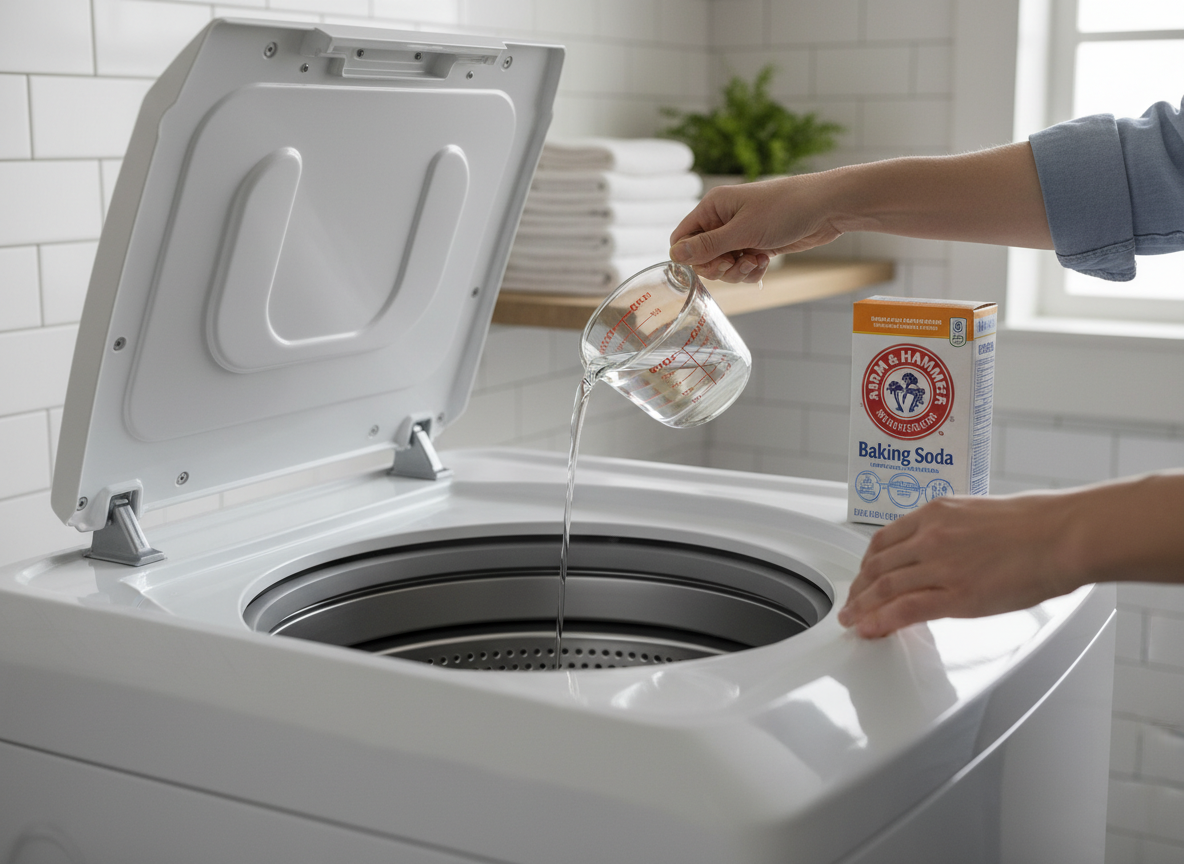
Step 1: Run a Hot Water Cleaning Cycle
- Make sure the machine is completely empty.
- Set your washer to the largest load size, hottest water temperature, and longest wash cycle.
- Add one of the following cleaning agents:
- 1 washing machine cleaner tablet placed at the bottom of the drum, OR
- 1 cup (250 ml) of liquid chlorine bleach added directly to the drum, OR
- 4 cups of white vinegar added directly to the drum
- Start the cycle and let it run to completion.
- Run an additional rinse and spin cycle to flush out any remaining cleaner residue.
Step 2: Clean the Agitator and Drum Interior
Top-loaders with agitators have an additional area that needs attention: the agitator itself, which can harbor mold and fabric softener residue.
- If your agitator has a fabric softener dispenser on top, remove it by twisting counterclockwise.
- Soak the dispenser in a solution of 1 gallon warm water, ¼ cup heavy-duty liquid detergent, and 1 cup bleach for 10 minutes.
- Scrub with a soft brush, rinse thoroughly, and replace.
- Wipe down the upper rim of the drum where the water doesn’t fully rinse — this area collects detergent residue.
- Scrub any visible buildup or staining with a cloth dipped in vinegar.
Step 3: Wipe Down the Exterior and Lid
- Mix a solution of equal parts white vinegar and water in a spray bottle.
- Spray the exterior of the machine, the top, and the control panel.
- Wipe clean with a microfiber cloth, paying attention to buttons and knobs where grime builds up.
- Open the lid and wipe the underside of the lid and the inside of the rim.
- Clean the detergent and fabric softener dispensers with a damp cloth or remove and soak if possible.
- Leave the lid open to allow the interior to air dry completely after cleaning.
How to Clean a Washing Machine with Vinegar and Baking Soda
If you prefer a chemical-free approach, cleaning your washing machine with vinegar and baking soda is a highly effective and eco-friendly alternative to commercial cleaning tablets. This natural method is safe for most machines and costs only a few cents per cleaning.
Important note: Do not mix vinegar and baking soda in the same cycle. Use them in separate steps — the combination neutralizes both, reducing their individual cleaning effectiveness.
Natural Cleaning Method for Front-Loaders
- Add 2 cups of white distilled vinegar to the detergent dispenser.
- Run a complete hot water cycle.
- After the cycle ends, sprinkle ½ cup of baking soda directly into the drum.
- Run another short hot water cycle.
- Wipe down the drum, gasket, and door with a clean microfiber cloth.
- Leave the door open to dry.
Natural Cleaning Method for Top-Loaders
- Fill the drum with hot water using the largest load setting.
- Add 4 cups of white vinegar to the water and allow the machine to agitate for 1 minute.
- Pause the cycle and let the vinegar solution soak for 30–60 minutes.
- While soaking, use a cloth dipped in the vinegar solution to clean the lid, rim, and dispensers.
- Resume the cycle and let it complete.
- Run a second cycle with ½ cup of baking soda added to the drum for extra deodorizing power.
How to Get Rid of Washing Machine Smells
A smelly washing machine is one of the most common laundry complaints. The musty, sour, or mildew-like odor typically comes from mold and bacteria growing in damp areas — especially the door gasket, drum, and detergent drawer. Here’s how to eliminate washing machine odors effectively:
- Run a hot sanitize cycle with a washing machine cleaner tablet or bleach immediately.
- Clean the gasket thoroughly with vinegar and a scrub brush, or treat visible mold with diluted bleach.
- Clean the detergent drawer — product buildup here is a major source of odor.
- Clean the filter — a dirty filter can cause standing water, which quickly becomes smelly.
- Leave the door open between washes so the interior dries out. This is the single most effective prevention tip.
- Use the right amount of detergent — too much detergent causes excess suds and residue buildup. Always follow dosage instructions.
- Switch to HE detergent if you have a high-efficiency machine, as regular detergent creates too much foam.
Tips to Keep Your Washing Machine Clean Between Deep Cleans
- Always leave the door or lid open after a wash cycle to allow the interior to dry.
- Remove wet laundry promptly — don’t leave damp clothes sitting in the drum.
- Use the correct amount of detergent — follow the manufacturer’s recommendations exactly.
- Run a hot wash cycle occasionally (at least 60°C / 140°F) to kill bacteria.
- Wipe down the door gasket after every few washes with a dry cloth.
- Never leave a wet load in the machine overnight — this is a primary cause of mildew odors.
- Clean the exterior regularly to prevent dust and grime buildup.
Signs Your Washing Machine Needs Cleaning
- Musty or sour smell when you open the door or during washing
- Clothes smell bad after washing — a sign that bacteria have colonized the drum
- Visible mold or dark spots on the door gasket or interior
- White or gray residue on clothes after washing — excess detergent or mineral deposits
- Excessive suds that don’t rinse away properly
- Machine takes longer to drain — could indicate a clogged filter
- Fabric softener buildup visible in the dispenser
Frequently Asked Questions
Can I use bleach to clean my washing machine?
Yes, bleach is an effective washing machine cleaner, particularly for killing mold and bacteria. Add 1 cup of liquid chlorine bleach to the drum (not the detergent drawer) and run a hot cycle. Always check your machine’s manual first, as some manufacturers advise against bleach use. Never combine bleach with vinegar or baking soda.
How do I clean a washing machine that smells really bad?
For a severely smelly washing machine, start by cleaning the rubber gasket with undiluted white vinegar and a scrub brush to remove visible mold. Then run a sanitize cycle or the hottest available cycle with a cleaning tablet or bleach. Clean the detergent drawer and filter as well. In extreme cases, you may need two or three cleaning cycles before the smell fully disappears.
Is it safe to mix vinegar and baking soda in the washing machine?
You can use both, but not at the same time. When mixed, vinegar (an acid) and baking soda (a base) react and neutralize each other, producing mostly water and CO₂ with little cleaning power. Use vinegar in one cycle and baking soda in a separate cycle for best results.
How often should I clean my washing machine filter?
Front-loading washing machines have a pump filter that should be cleaned every 3–6 months. If you wash heavily soiled items, pet bedding, or lots of lint-producing fabrics, clean it every 2–3 months. Top-loaders typically don’t have an accessible user-cleanable filter, though some models have a removable lint trap — check your owner’s manual.
What is the best washing machine cleaner?
For convenience and effectiveness, washing machine cleaner tablets like Affresh are among the most recommended by appliance manufacturers, including Whirlpool, Maytag, and GE. These tablets are specifically designed to remove residue and odors from all machine types. For a natural alternative, white distilled vinegar is the top choice — it’s cheap, effective, and environmentally friendly.
Conclusion
Knowing how to clean a washing machine is essential for keeping your laundry fresh, protecting your clothes, and extending the life of your appliance. Whether you have a front-loader or a top-loader, a monthly cleaning routine — plus the occasional deep clean of the gasket, drawer, and filter — will keep your machine performing at its best and your clothes smelling truly clean.
The key takeaway: always leave the door open after a wash, use the right amount of HE-compatible detergent, and run a cleaning cycle at least once a month. Your washing machine works hard for you — a little regular maintenance goes a long way.
Deep-Dive Guides: Washing Machine Cleaning by Topic
Want to go deeper on a specific washing machine cleaning topic? Our detailed step-by-step guides cover every subject in full:
- How to Clean a Front-Loading Washing Machine — Complete guide to cleaning the gasket, detergent drawer, pump filter, and drum in front-load washers, including how to deal with persistent odors and prevent mold recurrence.
- How to Clean a Top-Loading Washing Machine — Step-by-step deep clean for both agitator and HE impeller top-loaders, including drum wall scrubbing, agitator cleaning, and dispenser maintenance.
- How to Remove Mold from a Washing Machine — Targeted guide for removing black mold and mildew from the door gasket, detergent drawer, and drum, including when to replace the gasket entirely.
- How to Clean a Washing Machine with Vinegar and Baking Soda — The complete natural cleaning method using two pantry staples, with correct sequences for front-loaders and top-loaders, and a comparison with commercial cleaners.
- How to Clean a Washing Machine Filter — Full instructions for locating, removing, cleaning, and reinstalling the drain filter (pump filter) in front-loading machines, including troubleshooting drainage problems.
Leave a Reply